
PDXpert PLM Software
Product Lifecycle Management
PDXpert PLM software return on investment (ROI)
The return on investment (ROI) for any PLM software project can be quite compelling. In fact, it's often amazing just how good the results can be! With the affordability of PDXpert PLM software, project paybacks are often measured in weeks, not years. Our PDXpert PLM software ROI calculator is simple to use, easy to validate and financially conservative.
"I am convinced that the return on investment from our PDXpert PLM system is far greater than the ROI from our CAD system."
PLM software ROI inputs
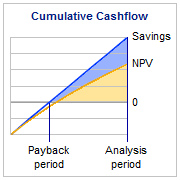
Typical 10‑user case: PDXpert pays for itself in ~9 weeks, ~$150k NPV over 5 years.¹
Quickly estimate the financial benefits of PDXpert PLM software. This model applies actual industry experience in employee productivity & change efficiency; design re-use; and reduced rework/scrap.
The ROI calculator requires a balanced set of interdependent inputsto forecast the results of implementing a complete system. A realistic ROI requires that you determine what product data you have now, what data you're likely to manage in the future, and who uses that data to add value to your product or process.
It's possible to create a theoretical NPV and IRR that's (literally) unbelievable by overstating inventory values, understating burdened labor costs or artificially constraining a large development community to just a few user accounts.
ROI Calculator
| User accounts: | ||
| Select license model, then click button | ||
Note: Typical operations will see per-hour savings of up to 50 times the software's cost per hour. A ratio higher than 50 indicates that planned user accounts may be insufficient, resulting in an unlikely ROI.
Contents
How does PDXpert PLM software offer great ROI?
It's simply high-leverage productivity with low project cost.
If you've ever scrapped or reworked parts because someone "didn't have time" to look for the latest design revision, you've seen how just a few seconds can cost thousands of dollars. If you've ever recreated a lost document instead of working on a new product, the benefit of secure data management is obvious. And if you dread updating a part across multiple BOM spreadsheets, it's because you know just how time-consuming and error-prone that can be.
Product development requires specialized and expensive staff whose minute-by-minute decisions profoundly influence tooling, inventory and assembly labor costs for years or even decades. Engineering change velocity affects initial revenue timing as well as vendor returns, scrap and rework costs. Normal staff turnover can lose previously-developed — and very expensive — documentation as well as knowledge about what changes were approved, when, by whom, and why.
While proper data management provides the leverage, PDXpert software's affordable price and flexible licensing translate into low project cost and a quick payback on your initial investment.
Through the power of leverage, relatively simple product data management efficiencies can make a big difference to your bottom line.
5 simple formulas measure PLM software's financial benefits
Although PDXpert PLM software has many potential benefits, we've focused on 5 areas with simple, easily-estimated inputs that produce clear outcomes. After reviewing a variety of third-party PLM software studies, we've extracted the most commonly-identified benefits that require only minimal data. We've also programmed far more conservative improvement percentages into our PLM software ROI calculator than were observed in actual practice.
1. Employee data search & collaboration productivity
Industry experience: PLM increases staff productivity by up to 25%; we use 3%
Employee efficiency = improvement% × empCost$ × allUsers
2. Engineering change throughput
Industry experience: PLM reduces an 8-hour manual change process by up to 50%; we use 5%
Change process = improvement% × (changes/year) × (hours/change) × (empCost$/hour)
3. Reduction in rework and scrap
Industry experience: PLM reduces materials budget by up to 4%; we use 0.4%
Rework/scrap reduction = improvement% × (materials$/year)
4. Increased part re-use and avoiding duplicate parts
Industry experience: PLM saves up to 56% of the development staff's time; we use 5%
Part re-use/avoid duplication = improvement% × currentParts × itemDevCost$
5. Preventing lost, misplaced or unapproved documentation
Industry experience: PLM saves up to 20% of the development staff's time; we use 2%
File loss reduction = improvement% × currentFiles × itemDevCost$
Where:
- empCost$ is the average user's total cost: gross wages + non-cash benefits
- allUsers = full-function users + read-only users
- itemDevCost$ = 40% × full-function users × empCost$ / (newParts + newFiles)
(assuming active contributors spend about 40% of their workweek on item development)
Although a PLM software purchase is often sponsored by a single department (say, Engineering or Quality), the financial benefits are realized across the entire organization. In fact, some of the most dramatic savings are seen in Purchasing and Production, through more efficient control of materials.
Observed benefits from major PLM software studies
Independent studies by Aberdeen, Accenture, AMR, CIMdata, IBM, Oracle and others have consistently shown that PLM software has a profound effect on increasing productivity and reducing costs. The largest corporations often spend millions for their PLM software, and therefore can afford the detailed studies that confirm a compelling ROI.
We understand that most small and mid-size companies can't afford expensive analysts. Your PLM decision has to rely on your own experience and thoughtful application of similar data. We offer this list of third-party studies to calibrate your own PLM software ROI model:
Engineering & Design Benefits
- • 7% to 14% improvement in engineering non-value-added time
- • 55% reduction in number of designed parts
- • Design cycle time reduced 25%
- • Engineering productivity increased 10% per year over 5 year period
- • Elimination of duplicate part numbers by 56%
- • Time for document search reduced by 80%
- • Employee productivity improved by 10-15%
Change Management Benefits
- • 10% reduction in ECO cycle time
- • ECO cycle time improved 40%
- • ECO cycle time reduced by 50%; administration expense reduced by 60%
- • Engineering change cycle reduced from 45 days to 4 days
- • ECO time reduction of 50%
- • Engineering change process reduced by 5 to 20 hours per change
Cost Reduction Benefits
- • 2% reduction in direct materials costs
- • 2% savings on direct materials purchase
- • Material cost reductions approximately 2% to 3%
- • 60% reduction in rework production costs
- • 50% increase in component reuse: 5% to 15% cost decrease
Customer & Quality Benefits
- • Customer RFQ to prototype cycle time reduced 50% - 75%
- • Eliminated almost 100% of customer order errors
- • Order errors reduced by 50%
- • RFQ response reduction from 2 weeks to 24 hours
- • 100% elimination of sending clients out-of-date product data
By assessing expected per-employee and percentage-based improvements, you can estimate the advantages of PLM software for your own company regardless of its size.
Is there any better investment you can make?
A PDXpert PLM software project delivers these benefits:
- ✓More efficient product development activities through faster part & document searches, better collaboration
- ✓Avoiding development costs typically associated with manual control processes, such as reproducing missing drawings and re-specifying parts that already exist or can be easily modified
- ✓Product unit cost reductions through part re-use and reduction of duplication, which reduces purchasing & warehousing activities while increasing volume purchases
- ✓Reducing administrative overhead ("doing more with less") for supporting activities like manual change management and document control
- ✓Reduction in scrap & rework by ensuring consistent bills of materials, accurate document revisions, and fast turn-around of required changes
- ✓Capturing the history of why changes were made to avoid reintroducing previous problems
These benefits are achieved using affordable PDXpert PLM software that offers a quick payback and high net present value under most investment scenarios.
- 1. A "typical PDXpert system" consists of a perpetual license for 20 full-function users and 30 read-only users with annual MSU, amortized over 5 years. The average financial return is based on a study of ROI calculations over a 12 month period.
- 2. As part of your own ROI calculation, contact us to obtain an accurate estimate of start-up services such as legacy data clean-up & migration and custom import/export templates. PDXpert allows you to import parts, BOMs, documents, design files and datasheets, approved supplier sources and other legacy data on your own.